
Monofilament vs Fluorocarbon: The Simple Truth for Family Fishing
Affiliate Disclosure: This post contains affiliate links. If you purchase gear through links to Berkley or Seaguar, we may earn a small commission at no extra cost to you. We only recommend gear that helps families get out on the water.
The Quick Answer: Which Line Should You Choose?
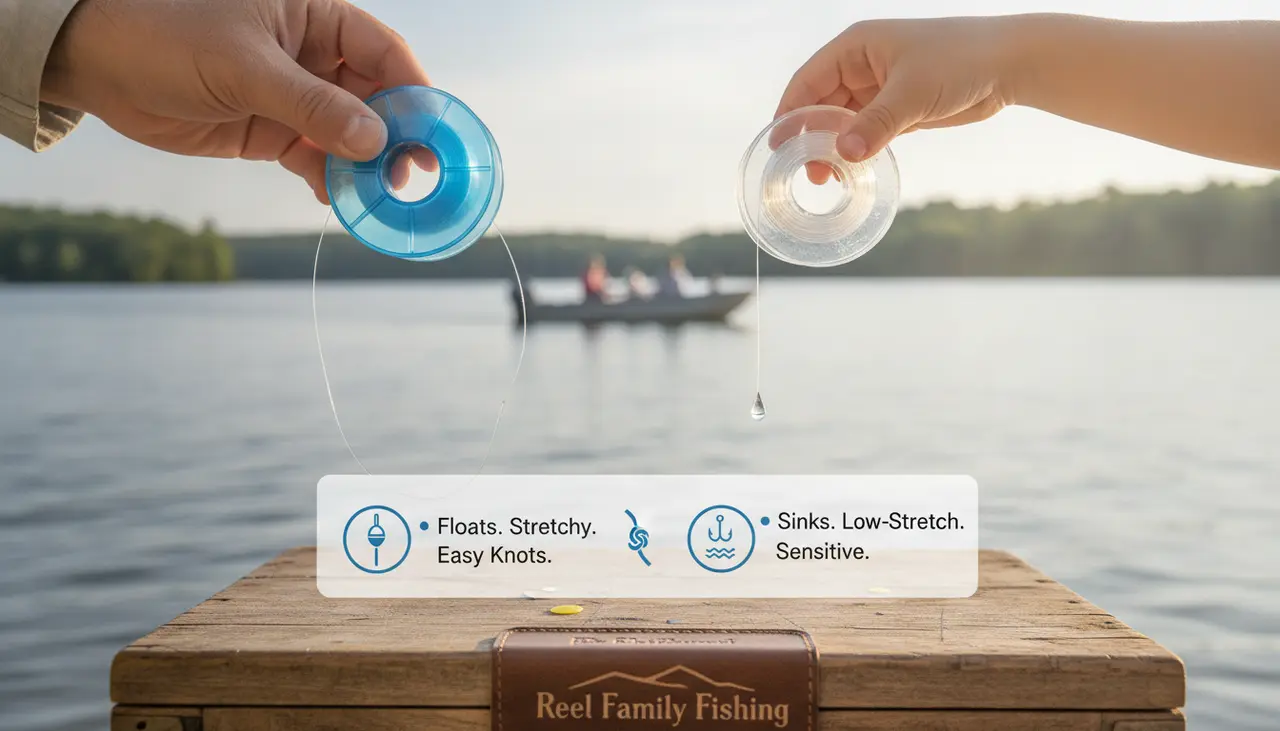
If you are looking for a quick answer to the monofilament vs fluorocarbon line debate, here is the simple truth: Monofilament is the best choice for beginners and kids because it is stretchy, easy to tie, and budget-friendly. It floats, making it perfect for bobber fishing or topwater lures.
Fluorocarbon is a specialized tool that is nearly invisible underwater and sinks quickly. It is best used as a "leader" (a short piece of line at the end) in clear water or when you are fishing deep for species like bass or trout. For most families, a high-quality monofilament main line is the most reliable way to ensure a stress-free day at the lake.
---
Why the Right Line Matters for Your Family Outing
We’ve all been there—you finally get the kids to the water, the sun is shining, and then... a tangled mess of line ruins the moment. Choosing between monofilament and fluorocarbon isn't just about "pro" specs; it’s about making sure your gear works for you, not against you.
This guide is for the weekend angler who wants to understand the "why" behind their tackle box. Whether you are spooling up a new Best Spinning Reel for Beginners or just replacing old line from last season, we’re here to help you make the right choice for your next family adventure.
Comparison at a Glance: Mono vs. Fluoro
| Feature | Monofilament | Fluorocarbon | | :--- | :--- | :--- | | Visibility | Moderate (Visible in clear water) | Low (Nearly invisible) | | Stretch | High (Forgiving for beginners) | Low (Better sensitivity) | | Buoyancy | Floats / Suspends | Sinks | | Abrasion Resistance | Moderate | High (Tough against rocks) | | Ease of Use | Very Easy | Moderate (Stiffer) | | Cost | Budget-friendly | Premium |
---
Understanding Monofilament: The Friendly All-Rounder
Monofilament (or "mono") has been the go-to for generations. It is made from a single strand of nylon and is incredibly versatile.
Why we love it for families:
- Forgiveness: Because mono stretches, it acts like a shock absorber. If a child sets the hook too hard or a big fish lunges, the line stretches rather than snapping.
- Easy Knots: It is much easier to tie than other lines. If you are teaching your kids How to Tie a Palomar Knot, mono is the perfect material to practice with.
- Affordability: Brands like Berkley Trilene offer fantastic performance at a price point that makes spooling up four or five family reels very affordable.
Best for:
- Topwater lures (since it floats).
- Bobber fishing with the kids.
- General-purpose pond and lake fishing.
---
Understanding Fluorocarbon: The Stealth Specialist
Fluorocarbon is made of a denser material (polyvinylidene fluoride). It is often more expensive, but it offers specific advantages when the fishing gets tough.
Why it’s worth considering:
- Invisibility: Its refractive index is very close to water, meaning fish have a much harder time seeing it. This is a game-changer in clear water.
- Sensitivity: With less stretch than mono, you can feel those tiny "taps" from a fish much more clearly.
- Fast Sinking: If you are using lures that need to get down deep, fluorocarbon helps them get there faster. Brands like Seaguar are the gold standard for this technology.
Best for:
- Clear water conditions where fish are "spooky."
- Bottom-fishing with jigs or worms.
- Using as a "leader" attached to your main line.
---
Practical Tradeoffs: What You Need to Know
While fluorocarbon sounds "better" because it's invisible, it comes with some challenges for the casual angler. Fluorocarbon is "stiffer" than mono. This means it can sometimes jump off the reel spool in a tangled mess (often called a bird's nest) if you aren't careful.
Monofilament, on the other hand, has "memory." If it sits on the reel for too long, it stays in a coiled shape. We recommend changing your mono line at least once a year to keep your casts smooth. For a full breakdown of how line fits into your overall setup, check out The Reel Family Fishing Master Buying Guide.
---
Common Beginner Mistakes to Avoid
- Using line that is too heavy: Many parents buy 20lb test line thinking it will prevent losing fish. However, heavy line is harder to cast and makes lures look unnatural. For most family outings, 6lb to 10lb test is plenty.
- Neglecting the Knot: Fluorocarbon can actually cut itself if a knot isn't tied and lubricated (with a little water or saliva) properly. Always test your knots before casting.
- Spooling too much line: Filling a reel to the very edge often leads to tangles. Leave about 1/8th of an inch of space from the edge of the spool.
---
Family Fishing FAQ
Q: Can I use fluorocarbon on a kid's spincast reel? A: We generally don't recommend it. Fluorocarbon is stiff and can cause issues inside the closed-face design of a spincast reel. Stick with a quality monofilament like Berkley Trilene XL for the little ones.
Q: Do I need to buy a whole spool of fluorocarbon? A: Not necessarily! A great "pro tip" for families is to use monofilament as your main line and just buy a small spool of Seaguar Fluorocarbon to use as a 2-foot leader. You get the stealth benefits without the high cost of filling the whole reel.
Q: How often should I replace my line? A: For monofilament, we suggest once a year. Fluorocarbon lasts a bit longer as it doesn't break down from UV rays as quickly, but it’s still good practice to check for nicks and abrasions after every trip.
Final Thoughts
At the end of the day, the "best" line is the one that keeps your hook in the water and a smile on your family's faces. If you want simplicity and ease, go with monofilament. If you’re heading to a crystal-clear lake and want every advantage possible, give fluorocarbon a try.
Happy fishing, and we'll see you on the water!