
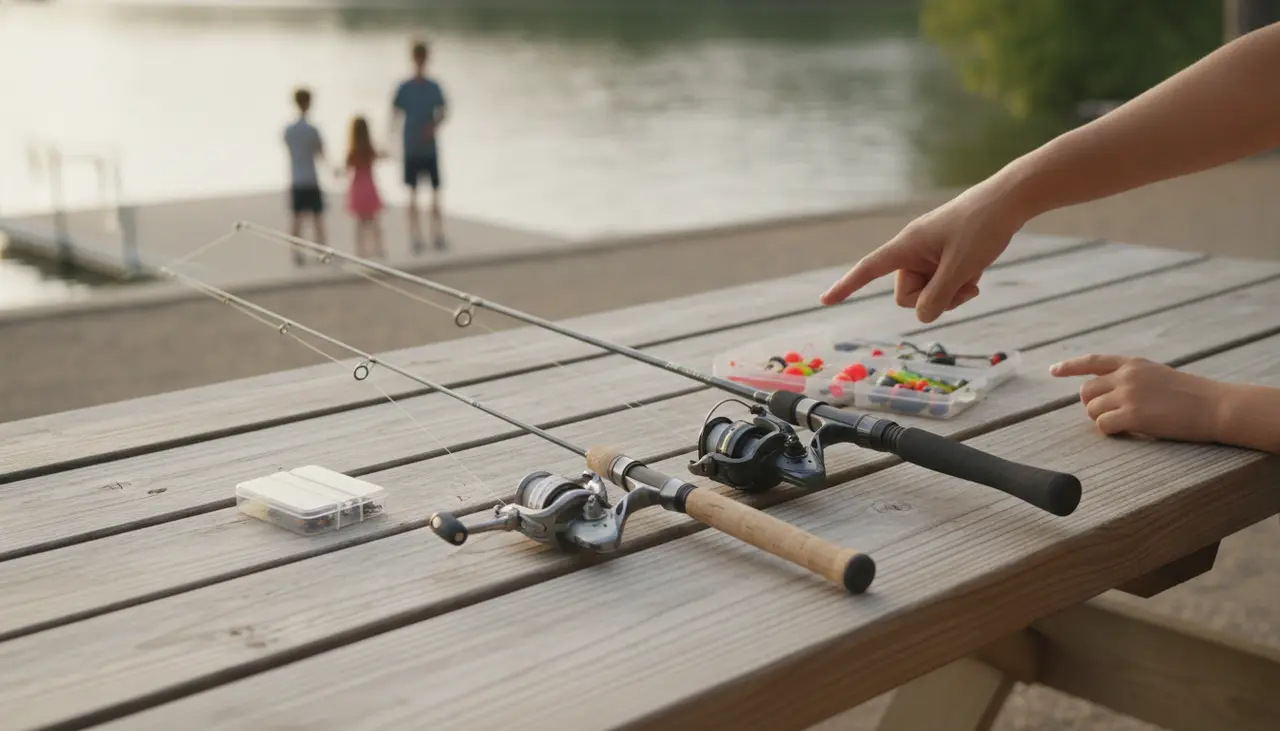
Ultralight vs Medium Power Rods: Which Is Right for Your Family Fishing Trip?
Affiliate Disclosure: This post contains affiliate links. If you purchase through these links, we may earn a small commission at no extra cost to you, helping us keep the Reel Family Fishing community growing.
Choosing a new fishing rod can feel like trying to learn a new language. You’re standing in the aisle, surrounded by labels like "Fast Action," "Medium Power," and "Ultralight," just trying to figure out which one will help your kids actually catch a fish this weekend. We’ve all been there—balancing a busy work week with the desire to give our families a perfect day on the water.
If you are wondering whether to grab an ultralight or a medium power rod, here is the short answer:
Choose an ultralight rod if you are targeting small fish like panfish (bluegill, crappie) or trout using very light lures. These rods make small fish feel like a big fight, which is incredibly fun for kids. Choose a medium power rod if you want a versatile "do-it-all" tool for larger species like bass, walleye, or catfish. A medium rod is the gold standard for most weekend warriors because it handles a wider variety of lures and fish sizes.
Who Is This Guide For?
This guide is designed for the family angler—the mom or dad who wants gear that works without the complexity of professional tournament setups. Whether you are shopping for your first "real" rod after outgrowing a cartoon-themed combo or you're looking to add a specialized tool to your collection, we’re here to help you make a smart, research-backed choice.
Ultralight vs Medium Rod: At a Glance
| Feature | Ultralight Rod | Medium Power Rod | | :--- | :--- | :--- | | Primary Target | Bluegill, Crappie, Small Trout | Bass, Walleye, Channel Catfish | | Lure Weight Range | 1/64 oz to 1/8 oz | 1/4 oz to 3/4 oz | | Recommended Line | 2 lb to 6 lb test | 6 lb to 12 lb test | | Best Environment | Ponds, small streams, docks | Lakes, large rivers, heavy cover | | "Fun" Factor | High (even small fish pull hard) | Moderate (focus on control and power) |
When to Choose an Ultralight Rod
We often recommend ultralight rods for families because they turn a simple trip to the local pond into an adventure. When you use an ultralight rod from brands like Shimano or Daiwa, the rod is much more flexible. This means that even a six-inch bluegill will bend the rod into a "U" shape, giving your kids (and you!) a thrill.
Best for:
- The "Numbers" Game: When you just want the kids to stay busy catching plenty of small panfish.
- Small Streams: If you’re hiking into a creek for wild trout.
- Light Lures: Using tiny jigs, spinners, or even just a hook and a worm under a bobber.
The Tradeoff: The main downside to an ultralight rod is its lack of "backbone." If a large 5-pound bass happens to grab your lure, you may struggle to pull it out of the weeds or keep it from snapping your light line.
When to Choose a Medium Power Rod
If you only want to buy one rod that can handle 80% of freshwater fishing situations, the medium power rod is your best friend. It has the strength to set the hook firmly in a bass's mouth but is still sensitive enough to feel a bite.
Best for:
- Versatility: Switching between a plastic worm for bass and a heavier sinker for catfish.
- Managing Larger Fish: Providing the leverage needed to pull fish away from logs or lily pads.
- Learning the Basics: It is often easier for beginners to learn casting with the slightly heavier lures used on medium rods.
The Tradeoff: Medium rods can feel a bit "stiff" when catching very small fish. You won't feel the subtle nibbles as easily as you would with an ultralight, and small fish won't put up much of a fight against the stronger rod.
To ensure you have the right reel to match your new rod, check out our guide on the Best Spinning Reels for Beginners in 2024: A Family-Friendly Guide.
Common Beginner Mistakes to Avoid
- Overloading the Line: One of the most common mistakes we see is putting 15-lb braided line on an ultralight rod. This can actually snap the rod tip because the line is stronger than the graphite or fiberglass. Always match your line to the rating printed on the rod handle.
- Using the Wrong Lures: Trying to throw a heavy 1-ounce sinker on an ultralight rod will make it feel "floppy" and ruin your casting distance. Conversely, a tiny 1/64 oz jig won't have enough weight to bend a medium rod during a cast, leading to tangles.
- Neglecting Maintenance: Whether it's a budget-friendly Abu Garcia or a premium rod, always rinse your gear with fresh water after use, especially if you happen to be near brackish water.
For a complete look at how to outfit the whole family, see The Reel Family Fishing Master Buying Guide: Gear for Every Age and Stage.
Frequently Asked Questions
Can I catch a bass on an ultralight rod? Yes! It is entirely possible and very exciting. However, you have to be patient and let the fish tire itself out, as you cannot "manhandle" a large fish with such a light rod.
What line is best for a medium power rod? For most families, a 8-lb to 10-lb Monofilament or Fluorocarbon line is perfect. It’s easy to tie knots with and strong enough for most suburban lake fish.
Is a medium rod too heavy for a child? Not necessarily, but length matters more than power for kids. A 6-foot medium rod might be fine for a teenager, but for younger children, look for shorter rods that are easier to maneuver.
Summary: Making the Choice
At the end of the day, we want you to spend less time worrying about gear and more time enjoying the sunset with a rod in your hand. If you’re heading to a pond to keep the kids entertained with non-stop bluegill action, go ultralight. If you’re heading to the lake to hunt for a "wall-hanger" bass or a tasty walleye dinner, go medium.
Happy fishing, and we'll see you on the water!