
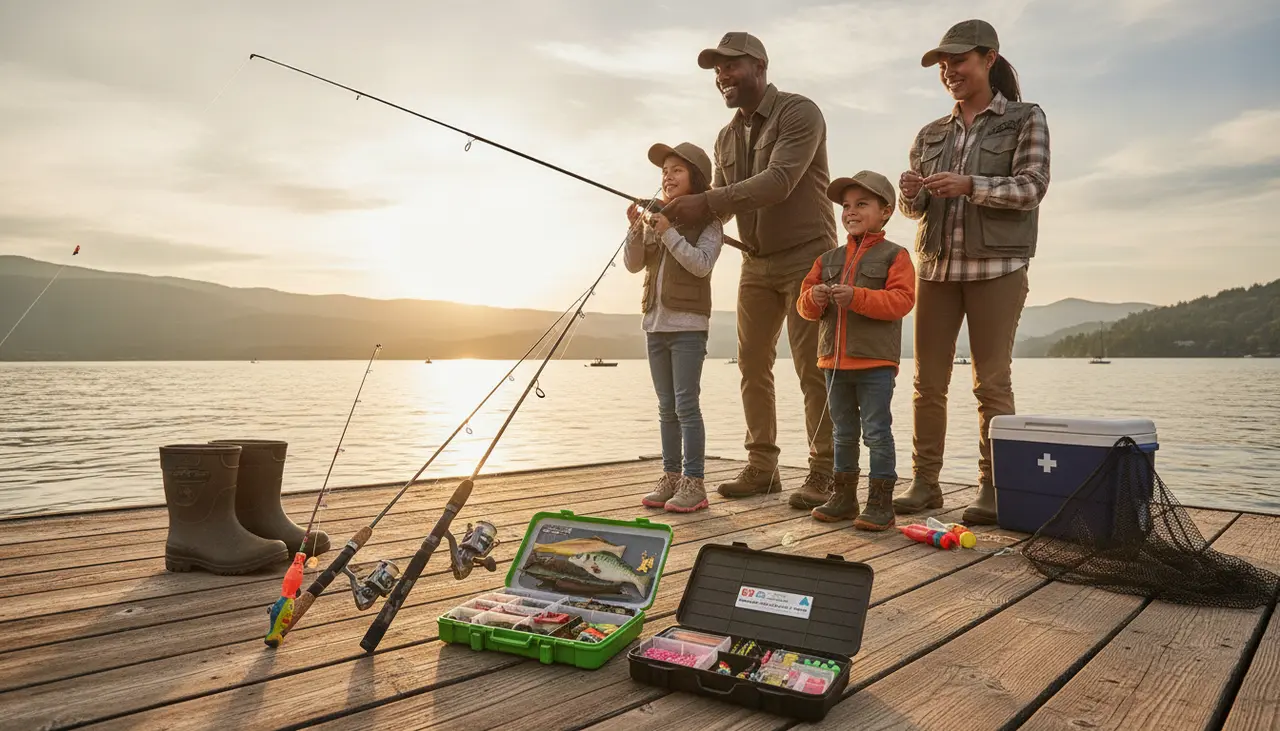
The Reel Family Fishing Master Buying Guide: Gear for Every Age and Stage
Affiliate Disclosure: This guide contains affiliate links. If you purchase gear through these links, we may earn a small commission at no extra cost to you, which helps us keep the Reel Family Fishing community growing.
Choosing the right all-ages recreational fishing gear means finding the "sweet spot" between professional-grade performance and backyard-friendly simplicity. For most families, the best starting point is a medium-light spinning reel combo paired with 6lb to 10lb monofilament line. This setup is versatile enough to catch everything from pond bluegill to lake-dwelling bass, ensuring everyone from the kids to the grandparents can enjoy the catch without fighting the equipment.
Who This Guide Is For: The Weekend Hero
We know how it goes. The work week is a blur of meetings and school runs, and you only have a precious Saturday morning to get everyone to the water. You’re an enthusiast fisher who loves the sport, but your priority has shifted. You aren't looking to win a professional tournament; you're looking to see your child’s face light up when their bobber dips under the surface.
This guide is for the parents and mentors who want practical, reliable gear that works every time it’s pulled out of the garage. We focus on quality without complexity, helping you spend less time untangling "birds' nests" and more time making memories.
The Reel Family Decision Framework
When we look at gear for our families, we evaluate it based on three pillars:
- Durability: Can it survive being dropped on a dock or left in a hot trunk?
- Ease of Use: Can a ten-year-old cast it, or will it require constant adult intervention?
- Longevity: Is this a "toy" that will break in a month, or a tool that will grow with the angler?
Comparing Reel Types for Family Members
| Reel Type | Best For | Pros | Cons | | :--- | :--- | :--- | :--- | | Spincast (Closed Face) | Young children (Ages 4-7) | Simple push-button casting; rarely tangles. | Limited casting distance; lower gear durability. | | Spinning (Open Face) | Teens and Adults | Highly versatile; easy to fix tangles; great for many species. | Requires a bit of finger coordination to cast. | | Baitcaster | Experienced Teens/Adults | High precision and power for heavier lures. | Steep learning curve; prone to "backlash" tangles. |
The "Best For" Gear Categories
#### Best for the Youngest Anglers: The Reliable Spincast For the little ones, we recommend looking at brands like Zebco or Abu Garcia for closed-face reels. These allow kids to focus on the "where" of fishing rather than the "how" of the mechanics. Look for combos that include a shorter rod (4'6" to 5') to help them manage the weight.
#### Best for the "All-Rounder" Parent: The Spinning Setup If you’re buying one setup to rule them all, a Shimano or Daiwa spinning reel in the 2500 series size is the gold standard. Pair it with a 6'6" medium-action rod. This setup is the "Swiss Army Knife" of the fishing world. It’s sensitive enough for trout but has the backbone for a decent-sized bass.
#### Best for Shore and Pier Safety: The Essentials Family fishing isn't just about the rod and reel. We always prioritize safety and comfort to ensure the trip doesn't end early.
- Life Jackets (PFDs): Essential for kids near docks or on boats.
- Polarized Lenses: These aren't just for style; they protect eyes from stray hooks and allow you to see fish through the water's surface glare.
- Waders: For families who want to explore shallow creeks, breathable chest waders from reputable brands provide a dry, comfortable experience.
Practical Tradeoffs: What to Spend On (and What to Skip)
- Spend on the Reel: A cheap reel with a gritty drag system will lose fish and frustrate you. Brands like Penn or Shimano offer entry-level models that feel professional.
- Save on the Rod: While high-end carbon fiber rods are nice, a durable graphite-composite rod is often better for families because it’s less likely to snap if it gets caught in a car door.
- Spend on Line: Don't use the "mystery line" that comes pre-spooled on the cheapest combos. Swapping it for a quality monofilament or fluorocarbon from a brand like Berkley will significantly reduce tangles.
Common Beginner Mistakes to Avoid
- Using Line That Is Too Heavy: Putting 20lb test line on a small reel makes casting nearly impossible and leads to constant loops and tangles. Match your line to the reel’s specifications.
- Neglecting Maintenance: Saltwater is the enemy of gear. Even if you’re using "saltwater rated" gear from Penn, always rinse your reels with fresh water after a trip to the coast.
- The "Over-Buying" Trap: It’s tempting to buy a massive tackle box and fill it with every lure on the shelf. We find it’s better to start with a small, portable tackle box and a few proven basics: hooks, split-shot weights, bobbers, and a few soft plastic lures.
The Reel Family Fishing Trip Checklist
Before you head out this weekend, make sure you have:
- [ ] Fishing licenses for all adults (check your local regulations).
- [ ] Rods and reels (inspected for smooth operation).
- [ ] Tackle box with extra hooks and line cutters.
- [ ] Polarized sunglasses for everyone.
- [ ] Sunscreen and bug spray.
- [ ] A first-aid kit.
- [ ] Snacks and plenty of water (the "secret weapon" for keeping kids happy).
Frequently Asked Questions
What is the best age to start a child fishing? Most children can begin using a spincast "button" reel around age 4 or 5. The key is to keep the sessions short and focus on high-action spots like farm ponds where they are likely to get a bite quickly.
Should I use live bait or artificial lures? For family outings, live bait (like worms or minnows) is almost always more effective for keeping kids engaged. Artificial lures are great once an angler has mastered casting and wants to target specific species like bass or pike.
Monofilament vs. Braided line: which is better for beginners? We generally recommend monofilament for families. It’s affordable, easy to knot, and has a bit of "stretch" which is forgiving when a beginner pulls too hard on a fish.
Looking Ahead
In our future guides, we will dive deeper into specific product reviews, such as our breakdown of the best spinning reels for bass under $50 and our comprehensive guide to choosing the best fishing waders for beginners. We’ll also be sharing tutorials on essential knots every family should know.
Fishing is about the connection—to nature and to each other. By choosing the right gear, we take the frustration out of the equation, leaving more room for the stories you'll tell for years to come. Tight lines!