
How to Clean and Store Your Gear After the Season: A Family Guide to Making Tackle Last
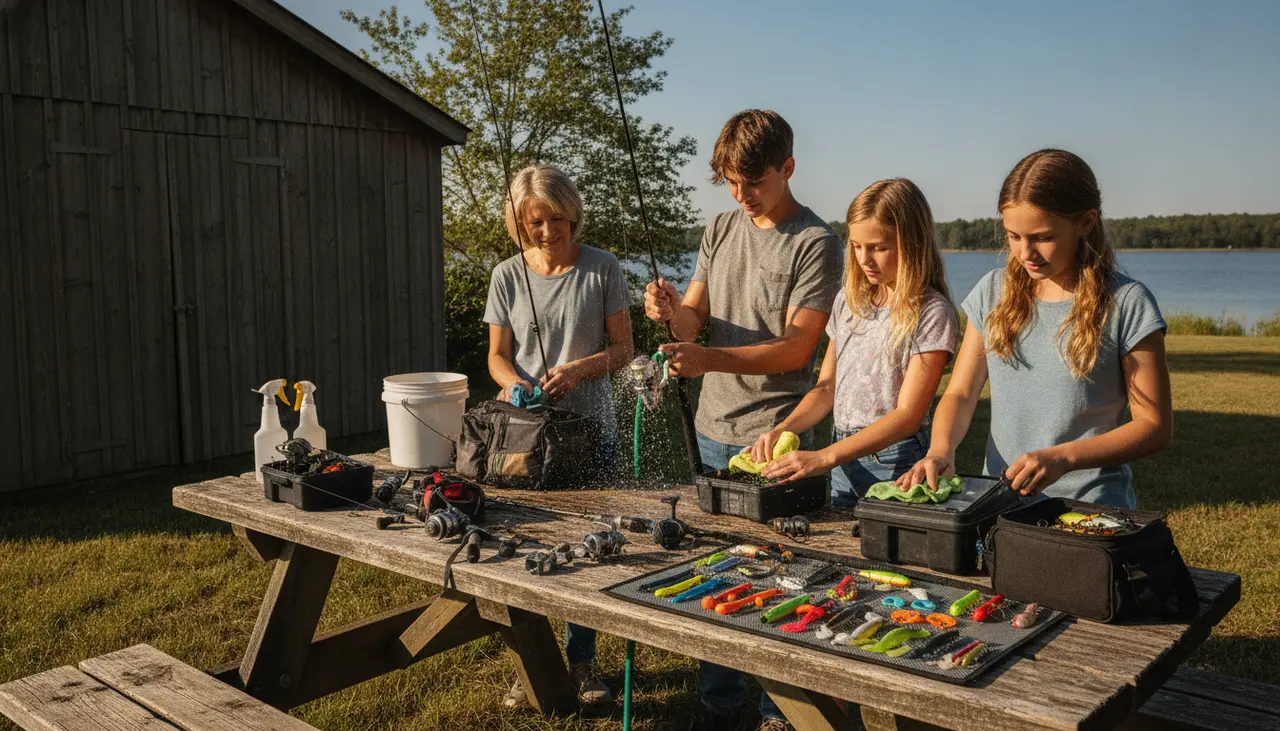
To properly clean fishing gear at the end of the season, you should rinse your rods and reels with a gentle stream of fresh water to remove salt and dirt, dry them completely with a microfiber cloth, and apply a drop of specialized reel oil to the moving parts. Store your rods vertically or horizontally in a cool, dry place, and back off the drag on your reels to prevent the washers from compressing and losing their effectiveness.
By taking these steps, you prevent corrosion and mechanical failure, ensuring that the equipment you’ve invested in for your family will perform like new when the spring thaw arrives.
Why Maintenance Matters for Family Anglers
We all know the feeling: the season is winding down, the kids are back in school, and the garage is a chaotic mess of summer gear. It is tempting to just lean the fishing rods in a corner and deal with them next year. However, taking just one afternoon to clean fishing gear properly is one of the best ways we can save money and avoid "gear heartbreak" on our first outing next spring.
This guide is for the busy parents and weekend enthusiasts who want to protect their investment. Whether you are maintaining the items found in our Best Spinning Reels for Beginners in 2024: A Family-Friendly Guide or caring for a vintage rod passed down through generations, these steps will keep you on the water longer.
Disclosure: This post contains affiliate links. If you click through and make a purchase, we may earn a commission at no additional cost to you. We only recommend products like reel oils and storage racks that we believe add value to your family fishing experience.
---
The End-of-Season Maintenance Checklist
Before you pack everything away, gather a few basic supplies: a bucket of warm water, mild dish soap, a soft-bristled toothbrush, specialized reel oil/grease, and a clean cloth.
#### 1. The Deep Rinse (Rods and Reels) Even if you only fish in freshwater, dirt and organic matter can build up in the tiny crevices of your gear.
- The Rods: Wipe down the entire blank with soapy water. Use the toothbrush to gently scrub the "guides" (the rings the line passes through). Even a tiny nick or salt deposit here can fray your line and cause you to lose a big fish later.
- The Reels: Close the drag tight before rinsing so water doesn't get into the internal drag washers. Give it a gentle mist—never use a high-pressure hose, as this forces grit deeper into the gears.
#### 2. Reel Lubrication and Tension Once the reel is bone-dry, it's time for some TLC.
- Oil the Bearings: Apply one tiny drop of reel oil (not WD-40!) to the handle knobs and the line roller.
- Back Off the Drag: This is the most forgotten step. Loosen the drag knob completely. If left tight all winter, the washers can stick together or flatten, making your drag "jerky" next season.
#### 3. Tackle Box Audit Don't let a "mystery lure" ruin your whole kit. Open every tray. If you find rusted hooks, throw them away—rust spreads like a virus to your clean lures. This is a great time to refer to The Reel Family Fishing Master Buying Guide: Gear for Every Age and Stage to see if you need to restock any essentials for next year.
---
Comparing Storage Solutions
Where you put your gear is just as important as how you clean it. Here is a quick look at how to choose the right storage for your home.
| Storage Type | Best For | Pros | Cons | | :--- | :--- | :--- | :--- | | Vertical Wall Racks | Garage or Basement | Keeps rods straight; saves floor space. | Requires drilling into walls. | | Ceiling Racks | Small Spaces | Uses "dead" space; keeps gear away from kids/pets. | Harder to reach for quick cleaning. | | Free-Standing Circular Racks | Den or "Fishing Corner" | Portable; easy to organize by family member. | Takes up floor real estate. | | Hard Rod Tubes | Long-term Attic Storage | Maximum protection against physical damage. | No airflow; gear must be 100% dry. |
---
Common Beginner Mistakes to Avoid
- Using the Wrong Lubricant: Household oils or WD-40 can actually break down the factory grease inside a reel. Always use dedicated reel oil.
- Storing Rods with a Bend: Never lean a rod against a wall at an angle for months. This can cause the rod to develop a permanent "set" or curve.
- Storing Wet Gear: This is the fastest way to grow mold on cork handles and rust on reel seats. Ensure everything is air-dried for at least 24 hours before putting it in a closed container.
---
Practical Tradeoffs: To Strip Line or Not?
A common question we get is: "Should I take the line off my reels for winter?"
- The Case for Stripping: If you use Monofilament, it has "memory." Leaving it on the spool all winter can make it come off in tight coils next year.
- The Case for Keeping: If you use high-quality Braid or Fluorocarbon, it can often last multiple seasons.
- Our Advice: If the line looks frayed or you can't remember the last time you changed it, strip it now. It’s one less chore to do during the spring rush!
---
Frequently Asked Questions
Can I store my fishing rods in an unheated garage? Yes, as long as they are dry. However, extreme temperature fluctuations can occasionally affect the epoxy on rod guides over many years. If you have the space, a climate-controlled closet is always better.
What is the best way to clean cork handles? If your rod handles are looking dark and grimy, a light scrub with a Magic Eraser or a bit of soapy water will bring back that "new rod" look and feel.
How often should I oil my reels? For most families, a thorough oiling at the end of the season and once midway through the summer is plenty.
Final Thoughts for the Family
Cleaning fishing gear doesn't have to be a lonely chore. Get the kids involved! Give them a cloth and let them "polish" their own rods. It teaches them to respect their equipment and builds anticipation for our next big adventure together. When spring arrives and the fish start biting, you’ll be the first family on the water while everyone else is at the shop buying replacement gear.