
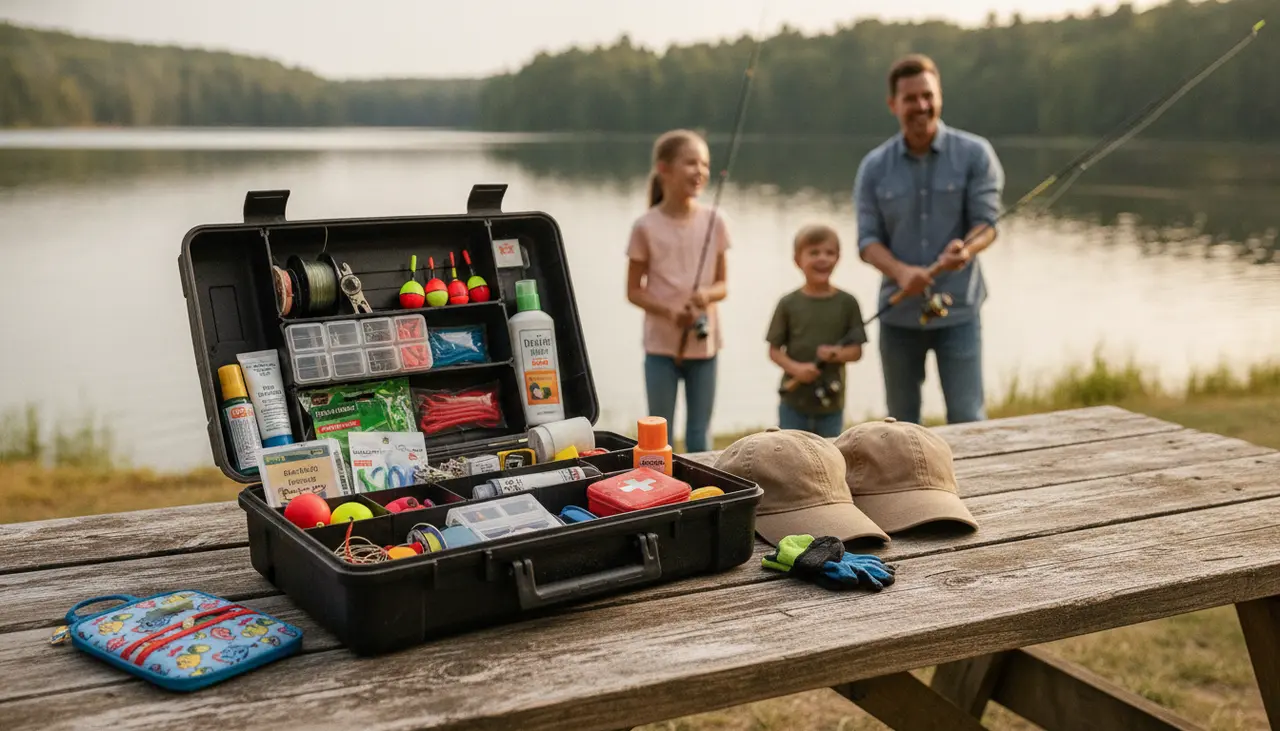
Essential Tackle Box Checklist for Family Trips: A Mom-Approved Guide
Affiliate Disclosure: This post contains affiliate links. If you purchase through these links, we may earn a small commission at no extra cost to you, which helps us keep the Reel Family Fishing community growing!
The secret to a successful family fishing trip isn't just about catching the biggest fish; it’s about being prepared for the "little things" that can make or break the day. For a stress-free outing, your tackle box should include a mix of terminal tackle (hooks, weights, and bobbers), basic tools like needle-nose pliers, and "mom-approved" essentials like extra snacks and a first-aid kit.
We’ve all been there: you finally get the kids to the water’s edge, the sun is shining, and you realize you forgot the extra line or the specific hooks needed for the local pond. By keeping a dedicated checklist of tackle box essentials, we can spend less time rummaging through the trunk and more time helping our kids land their first catch.
Who Is This Checklist For?
This guide is specifically for parents and hobbyist fishers who want a reliable, grab-and-go system. Whether you are heading to a local lake for bluegill or a slow-moving river for bass, these essentials are designed to cover the basics without the complexity of professional tournament gear.
---
Choosing Your Foundation: Pre-Filled vs. Custom Tackle Boxes
Before we dive into the items, you need a place to put them. Here is a quick look at how the two most common approaches compare for busy families.
| Feature | Pre-Filled Tackle Kits | Custom "Build-Your-Own" Box | | :--- | :--- | :--- | | Best For | Absolute beginners and last-minute trips. | Families with specific target fish (Bass, Trout, etc.). | | Convenience | High; everything is ready to go. | Lower; requires time to shop for individual pieces. | | Quality | Varies; hooks may be thinner or less durable. | High; you choose the brands like Eagle Claw or Gamakatsu. | | Cost | Generally more affordable upfront. | Higher initial investment but better long-term value. |
---
The "Mom-Approved" Tackle Box Essentials Checklist
To make things easy, we’ve broken this down into four categories. You don’t need a massive, three-tray chest—a medium-sized Plano or Flambeau box usually does the trick for a family of four.
#### 1. The Terminal Tackle (The "Business End") These are the items that actually go on your line. Since kids (and let’s be honest, adults too!) tend to get snagged on logs or rocks, always pack more than you think you need.
- Multi-pack of Hooks: Look for a variety pack of "Baitholder" hooks in sizes #6 to #10. These are perfect for worms and stay secure.
- Split Shot Sinkers: These small lead or tin weights pinch onto the line to help your bait sink.
- Bobbers/Floats: Classic red-and-white clip-on bobbers are great for kids because they provide a clear visual cue when a fish bites.
- Snap Swivels: These make it incredibly easy to change lures or hooks without re-tying knots every five minutes—a huge time-saver for parents!
#### 2. Essential Tools
- Needle-Nose Pliers: Essential for removing hooks safely and quickly. We recommend a pair with a built-in wire cutter.
- Line Nipper or Nail Clippers: For trimming excess line after tying a knot.
- Small Tape Measure: To check if that "monster" bass meets the local keeping size (or just for bragging rights!).
- Extra Fishing Line: A small spool of 6lb or 8lb monofilament is perfect for most freshwater situations.
#### 3. Lures and Bait While live worms are the gold standard for family fun, having a few "artificials" in the box helps when the bait shop is closed.
- Soft Plastic Grubs: Simple and effective for panfish.
- Inline Spinners: (Like a Mepps or Panther Martin) These are "cast and retrieve" lures that are easy for kids to use.
- Floating Jig Heads: Great for keeping bait just off the bottom.
#### 4. The "Just-In-Case" Kit This is where the "mom-approved" part comes in. We know that fishing is about more than just fish!
- Band-Aids and Antiseptic: For the inevitable minor poke or scrape.
- Sunscreen and Bug Spray: Nothing ends a trip faster than a sunburn or a swarm of mosquitoes.
- Hand Sanitizer or Wet Wipes: Essential after handling slimy fish or worms before the kids reach for their snacks.
---
Common Beginner Mistakes to Avoid
- Over-packing: You don't need 500 lures. A heavy tackle box is just one more thing to lug from the car. Stick to the essentials.
- Using Line That Is Too Heavy: For most family pond fishing, 20lb test line is overkill and makes casting difficult for kids. Stick to 6lb-10lb monofilament.
- Forgetting to Organize: We recommend using small, clear plastic utility trays. It prevents hooks from tangling into a "birds nest" at the bottom of the box.
If you are still looking for the right rod to pair with your new tackle setup, don't miss our review of the Top 5 Fishing Rods for Kids: Durable and Easy to Handle.
---
Practical Tradeoffs: Hard Box vs. Soft Bag
- Hard-Shell Plastic Boxes: These are durable and can double as a seat for a toddler. However, they can be bulky and noisy if dropped.
- Soft-Sided Tackle Bags: These often come with shoulder straps, making them easier to carry if you have to hike a bit to get to your favorite spot. The tradeoff is they offer less protection for the gear inside if they get stepped on.
---
Frequently Asked Questions
What is the best tackle box size for a family? A "medium" box (roughly 14-16 inches) is usually the sweet spot. It fits enough gear for 2-3 people without becoming too heavy for a child to help carry.
Should I buy a pre-made tackle kit? If you are brand new to the hobby, a pre-made kit is a fantastic way to get started quickly. However, as you learn what works in your local waters, you’ll likely want to replace those items with higher-quality hooks and lures.
How do I keep my tackle from rusting? After a day at the lake, especially if it rained, leave your tackle box open in a dry area at home for a few hours. This allows moisture to evaporate and prevents your hooks from rusting.
Summary Checklist for Your Next Trip
- [ ] Hooks (Assorted sizes)
- [ ] Bobbers
- [ ] Sinkers
- [ ] Pliers
- [ ] Line Clippers
- [ ] Extra Monofilament Line
- [ ] Hand Wipes
- [ ] Small First-Aid Kit
Fishing is all about making memories, and having the right tackle box essentials on hand ensures those memories are about the "one that got away" rather than the "one thing we forgot!" Happy fishing, families!